

A tiny bacterial infection can disrupt your daily routine, turning simple activities into uncomfortable challenges. But how does medicine help your body tackle these invisible invaders? Understanding how antibiotics fight bacteria reveals the science behind treating many bacterial infections. These medicines work by targeting essential parts of bacteria, stopping their growth or destroying them. However, not every infection responds to antibiotics, and using them incorrectly can create serious problems over time. From understanding how antibiotics work to learning about antibiotics tablets, exploring their role can help you make informed decisions about treatment and responsible medicine use.
What Happens When Harmful Bacteria Enter the Body?
Harmful bacteria can enter the body through contaminated food, unsafe water, cuts, or contact with infected surfaces. However, not every bacterium causes illness. Problems begin when disease-causing bacteria multiply, damage tissues, or trigger inflammation. The immune system works to control these invaders, but certain infections may require medical treatment. Understanding how antibiotics fight bacteria helps explain why identifying the cause of an infection is important before choosing a medicine.
How Do Bacteria Multiply and Cause Infections?
Bacteria are microscopic organisms that can reproduce quickly under suitable conditions. When harmful bacteria enter a vulnerable area, they may multiply and interfere with normal body functions. Some release substances that damage tissues, while others trigger an immune response that causes swelling, pain, or fever.

The effects depend on the type of bacteria, the location of the infection, and the person’s overall health.
Common Signs That Indicate a Bacterial Infection
Recognising unusual changes can help people decide when to seek medical advice.
Common warning signs include:
- Fever and chills: The body may raise its temperature while responding to an infection.
- Redness and swelling: These changes can occur when the immune system reacts to bacteria in damaged tissue.
- Pain or tenderness: An affected area may feel sore, sensitive, or uncomfortable.
- Unusual discharge: Some infections produce discharge that requires professional assessment.
- Persistent symptoms: Symptoms that worsen or fail to improve may need further investigation.
Viruses and other conditions can cause similar symptoms, so a healthcare professional may recommend an examination or laboratory test.
Why Is the Right Diagnosis Important?
Choosing a medicine without knowing the cause of an illness can delay appropriate care. Antibiotics are designed to treat certain bacterial infections, but they cannot cure viral illnesses such as the common cold. A clinician considers symptoms, medical history, and test results when deciding whether antibiotic treatment is appropriate.
Using antibiotics tablets without professional guidance may also cause side effects and contribute to antibiotic resistance. Resistance develops when bacteria become less responsive to medicines that previously controlled them.
- Explain your symptoms and any known medicine allergies to your healthcare professional.
- Follow recommended testing and treatment instructions.
- Never take leftover antibiotics or someone else’s prescription.
How Does the Body Respond to Harmful Bacteria?
The immune system identifies many invading bacteria and uses specialised cells and other defence mechanisms to control them. When an infection requires treatment, a suitable medicine may support this natural response. Knowing how antibiotics fight bacteria makes it easier to understand why the correct diagnosis, appropriate medicine, and responsible use all matter.
Not every infection needs antibiotics, and treatment depends on the specific bacteria and the person’s condition. Medical guidance helps ensure that antibiotics are used when appropriate rather than unnecessarily.
How Antibiotics Fight Bacteria Inside the Body
When bacteria cause an infection, the body begins defending itself, but sometimes its natural response is not enough to control the problem. This is where antibiotics fight bacteria by targeting specific structures or processes that bacteria need to survive and multiply. Different medicines work in different ways, so the right choice depends on the infection and the bacteria responsible for it. Understanding these mechanisms explains why one medicine may work well for a particular infection but prove unsuitable for another. Medical professionals select treatment based on clinical findings and, when needed, laboratory test results.
Stopping Bacteria From Building Protective Cell Walls
Many bacteria rely on a strong outer cell wall to maintain their shape and protect themselves from their surroundings. Without a properly formed cell wall, some bacteria become weak and may break apart. This mechanism is useful because human cells do not have bacterial cell walls, allowing these medicines to target a structure that differs between bacteria and human cells.
However, not every antibiotic works this way. The medicine must be suitable for the bacteria involved, and resistance can reduce its effectiveness.

Preventing Bacteria From Producing Essential Proteins
Bacteria need proteins to grow, repair damage, and carry out everyday functions. They produce these proteins using structures called ribosomes, which differ from those found in human cells.
Some antibiotics attach to bacterial ribosomes and interfere with protein production. As a result, susceptible bacteria may struggle to grow or perform the functions necessary for survival. Depending on the medicine and the bacteria, this interference can stop multiplication or contribute to bacterial death.
This is one reason healthcare professionals consider the type of infection before choosing a treatment. Different antibiotics target different bacterial processes, and selecting the appropriate medicine helps improve the likelihood of effective treatment.
Interfering With Bacterial DNA and Growth
Bacteria must copy their genetic material before dividing into new cells. Certain medicines interfere with the enzymes responsible for copying or maintaining bacterial DNA.
These approaches show that bacterial infections can be treated through several mechanisms rather than one universal method.
The effectiveness of treatment depends on the bacteria’s susceptibility, the medicine’s properties, and the infection site.
Slowing Bacterial Multiplication to Help Control Infection
Not all treatments destroy bacteria directly. Some limit their ability to multiply, giving the immune system a better opportunity to control the infection. This does not mean that every growth-limiting medicine is suitable for every patient; the choice depends on the infection and clinical circumstances.
How Antibiotics Tablets Deliver Treatment
Antibiotics tablets are taken by mouth and, depending on the medicine, are absorbed through the digestive system before reaching the bloodstream. From there, the active ingredient travels to body tissues, where it can act against susceptible bacteria.
The prescribed dose, timing, and duration matter because they influence how much medicine reaches the infection site. Patients should follow professional instructions, avoid sharing prescriptions, and ask a healthcare professional about missed doses or unexpected side effects.
Ultimately, understanding how antibiotics fight bacteria helps explain why accurate diagnosis and responsible medicine use are essential. Not every infection requires antibiotics, and these medicines do not treat viral illnesses.
Bacteria-Killing Antibiotics vs. Growth-Blocking Antibiotics
Not all antibiotics tackle bacterial infections in the same way. Some medicines damage bacteria directly, while others prevent them from multiplying, allowing the body’s immune system to help control the infection. Understanding this difference explains how antibiotics fight bacteria and why a medicine suitable for one condition may not be the best option for another. The choice depends on the bacteria involved, the infection’s location, its severity, and the patient’s health. Healthcare professionals consider these factors before recommending treatment rather than relying on a single approach for every bacterial illness.
How Bactericidal Antibiotics Kill Bacteria
Bactericidal antibiotics work by killing susceptible bacteria rather than simply slowing their growth. Depending on the medicine, they may interfere with cell wall formation, damage essential cellular functions, or disrupt processes needed for bacterial survival.
For example, some penicillin-type medicines interfere with bacterial cell wall construction. Without a stable wall, susceptible bacteria may break apart and die. Other medicines act on different bacterial targets to produce a similar result.
These medicines can be useful for particular infections, but their suitability depends on the clinical situation. A bactericidal medicine is not automatically better for every infection, and bacterial resistance may affect whether it works.
How Bacteriostatic Antibiotics Limit Bacterial Growth
Bacteriostatic antibiotics mainly prevent susceptible bacteria from multiplying. Instead of killing the bacteria directly, they interfere with processes needed for continued growth, such as protein production.
When bacterial multiplication slows, the immune system may have a better opportunity to remove the remaining organisms. The effectiveness of this approach depends on the patient’s immune response, the infection being treated, and the medicine’s ability to reach the affected area.
Some medicines may act differently depending on the bacterial species and the concentration achieved. Therefore, the distinction between growth-blocking and bacteria-killing action is useful, but it should not be treated as an absolute rule for every situation.
Why Different Infections Require Different Antibiotics
The right treatment depends on more than whether a medicine kills bacteria or slows their growth. Healthcare professionals consider the likely cause of infection, the patient’s medical history, possible allergies, and local resistance patterns. Testing may also help identify the organism and determine which medicines are likely to work.
Several factors influence antibiotic selection:
- Type of bacteria: Different organisms respond to different medicines.
- Infection location: The medicine must reach the affected tissue in a suitable concentration.
- Patient health: Age, allergies, kidney function, and other conditions may influence treatment.
- Resistance: Some bacteria have developed ways to survive medicines that once controlled them.
These considerations help explain why using leftover medicine or choosing treatment without medical guidance can be harmful.
Choosing and Using Antibiotics Tablets Responsibly
Antibiotics tablets offer a convenient way to treat certain bacterial infections when an oral medicine is appropriate. However, the correct product, dose, and duration must be determined for the specific condition. Patients should follow their prescription and seek professional advice if symptoms worsen or side effects occur.
Remember, antibiotics fight bacteria only when the medicine is appropriate for the organism and infection. Taking antibiotics unnecessarily can contribute to resistance and expose people to avoidable side effects. Likewise, antibiotics tablets cannot cure viral illnesses such as the common cold. Responsible use protects individual health and helps preserve the effectiveness of these medicines for future treatment.
Why Antibiotics Do Not Work Against Viruses
A sore throat, fever, cough, or runny nose can make you wonder whether you need medicine to recover. However, the right treatment depends on what is causing the illness. Understanding how antibiotics fight bacteria helps explain why these medicines cannot treat every infection. Bacteria and viruses differ in their structure and the way they reproduce. Antibiotics target specific features of bacteria, whereas viruses rely on living host cells to make more copies of themselves. Using the wrong medicine may not improve symptoms and can expose you to unnecessary side effects. Identifying the cause is the first step towards appropriate care.
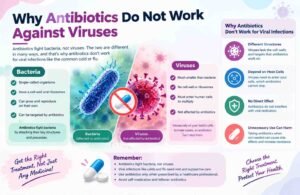
Key Differences Between Bacteria and Viruses
Bacteria are single-celled organisms that can grow and reproduce under suitable conditions. Some cause infections, while many others live harmlessly in or around the human body. Certain bacteria have structures and biological processes that medicines can target.
Viruses are much smaller infectious agents. They cannot reproduce independently and instead enter host cells to produce new viral particles. Because they do not have the same cell walls, ribosomes, and other targets found in bacteria, standard antibiotics cannot stop viral replication.
This difference explains why treatment must match the infectious agent. A medicine designed to disrupt bacterial cell wall formation, for example, will not eliminate a virus that has no bacterial cell wall.
Why Antibiotics Cannot Treat the Common Cold or Flu
The common cold and influenza are caused by viruses. Although they may produce symptoms similar to some bacterial infections, antibiotics do not act against the viruses responsible for these illnesses.
For most uncomplicated colds, care focuses on rest, adequate fluids, and relief of symptoms when appropriate. Influenza may require antiviral medicine for certain patients, particularly when treatment can begin early. A healthcare professional can advise whether further assessment or specific treatment is necessary.
Do not assume that thick mucus or a fever automatically means antibiotics are needed. Symptoms alone may not reliably distinguish viral and bacterial illnesses.
Risks of Taking Antibiotics Without Medical Advice
Taking antibiotics when they are not needed provides no direct benefit against a viral infection. It can also cause problems, including nausea, diarrhoea, allergic reactions, and disruption of helpful bacteria in the body.
Unnecessary exposure can contribute to antibiotic resistance. This occurs when bacteria develop the ability to survive medicines that previously controlled them, making some infections more difficult to treat.
Before using medicine, remember these practical points:
- Do not take leftover antibiotics for a new illness.
- Never share a prescription with another person.
- Ask a healthcare professional whether your symptoms need testing or treatment.
- Seek medical advice if symptoms become severe, persist, or worsen.
Choosing the Right Treatment for an Infection
Antibiotics tablets may be prescribed for certain bacterial infections, but they are not a universal remedy for fever, cough, or pain. A clinician considers symptoms, medical history, examination findings, and sometimes laboratory tests before recommending treatment.
Understanding why antibiotics fight bacteria rather than viruses encourages more responsible decisions. Use antibiotics only when prescribed or otherwise directed by an authorised healthcare professional, and follow the specific instructions provided. Even when antibiotics tablets are appropriate, the medicine must match the infection.
The key lesson is simple: effective treatment begins with understanding the cause of illness, not choosing medicine based on symptoms alone.
Conclusion
Understanding how antibiotics fight bacteria helps people make informed decisions about infection treatment. These medicines target essential bacterial functions, but they cannot cure viral illnesses such as the common cold. Using antibiotics responsibly, following medical advice, and avoiding unnecessary treatment can help reduce the risk of antibiotic resistance. Antibiotics tablets should be taken according to the prescription, with any concerns discussed with a healthcare professional. For pharmaceutical businesses exploring medicine suppliers, Biomorph Lifesciences is a company to consider when researching product availability and relevant quality documentation. Informed choices support responsible medicine use and better healthcare practices.
Frequently Asked Questions
Q. How do antibiotics fight bacteria inside the body?
Antibiotics target essential bacterial processes, such as cell wall formation or protein production. Depending on the medicine, they can kill susceptible bacteria or prevent them from multiplying.
Q. Do antibiotics tablets kill every type of bacteria?
No. Different medicines work against different bacteria. The appropriate treatment depends on the organism, its susceptibility, and the infection being treated.
Q. How long do antibiotics take to work against a bacterial infection?
The time varies depending on the infection, the medicine, and the person’s health. Follow the prescribed treatment plan and contact a healthcare professional if symptoms worsen or fail to improve as expected.
Q. Why do antibiotics not work against viruses?
Viruses reproduce inside host cells and lack many of the structures that antibiotics target in bacteria. Viral infections may require supportive care or specific antiviral treatment.
Q. Can bacteria become resistant to antibiotics?
Yes. Bacteria can develop resistance, making certain medicines less effective. Using antibiotics only when appropriate and following professional instructions helps reduce unnecessary antibiotic exposure.
Instagram : Follow Us For The Latest Update