
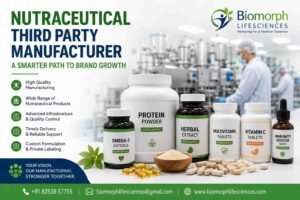
A great nutraceutical brand starts long before the product reaches a customer’s hands—it starts with choosing the right manufacturing partner. As demand for vitamins, supplements, and wellness products continues to grow, businesses are searching for reliable ways to launch quality products without building their own manufacturing facilities. This is where a nutraceutical third party manufacturer can make a real difference. From formulation and production to packaging and quality checks, the right partner can simplify complex processes and help brands move faster. But not every manufacturer offers the same value. In this guide, discover how the right partnership can turn your product idea into sustainable brand growth.
What Makes a Nutraceutical Third Party Manufacturer a Valuable Partner?
Launching a supplement brand involves more than creating an attractive label. Product quality, consistent manufacturing, packaging, testing, and timely delivery all influence how customers view a business. A reliable nutraceutical third party manufacturer can handle these production responsibilities while allowing the brand owner to concentrate on marketing, distribution, and customer relationships.
One major advantage is access to established manufacturing infrastructure. Instead of investing heavily in machinery, production units, trained staff, and quality-control systems, businesses can work with an experienced manufacturer that already has these resources in place. This can reduce the initial burden and make product launches more manageable.
Expertise That Supports Better Products
Experienced manufacturers understand the technical requirements involved in producing nutraceutical supplements. They can assist with formulation selection, ingredient sourcing, dosage formats, packaging choices, and production planning. Their knowledge can also help businesses avoid common manufacturing mistakes and maintain consistency from one batch to another.
Quality and Compliance Matter
A trustworthy manufacturing partner should follow appropriate quality procedures and maintain proper documentation. Businesses should review certifications, testing processes, raw-material standards, and batch-control practices before finalizing an agreement. These checks can provide greater confidence in product safety and consistency.
Flexibility for Growing Brands
Another benefit of nutraceutical third party manufacturing is the ability to develop or expand a product range without building a separate facility. Depending on the manufacturer, businesses may choose from tablets, capsules, powders, gummies, liquids, and other suitable formats.
The right partnership can therefore offer more than production support. It can create a dependable foundation for scaling a nutraceutical business, responding to market demand, and introducing new products with greater efficiency.
From Product Idea to Market: How the Partnership Takes Shape
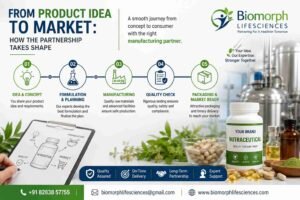
Turning a supplement concept into a market-ready product requires careful planning at every stage. Working with a nutraceutical third party manufacturer can make this journey easier by bringing technical expertise, production facilities, and quality processes under one roof. Instead of managing every manufacturing task independently, a brand can focus on understanding its customers and building market demand.
Defining Your Product Requirements
The process usually begins with a clear product brief. Decide what the supplement should offer, who it is intended for, and which format would suit the target audience. Tablets, capsules, powders, gummies, and liquid formulations may require different production approaches. A detailed requirement helps the manufacturer understand your expectations from the beginning.
Selecting Suitable Formulations and Ingredients
Once the product concept is established, formulation becomes the next important step. Ingredients should be selected according to the intended purpose, quality standards, dosage requirements, and applicable regulations. An experienced manufacturing partner can help evaluate available ingredients and develop a practical formulation.
Finalizing Packaging, Labelling, and Branding
Packaging is not simply about appearance; it also protects the product and communicates essential information to consumers. Brands should finalize container types, label design, product information, batch details, and other required declarations before production. Good packaging can also help a new supplement stand out on crowded shelves and online marketplaces.
Production, Quality Checks, and Dispatch
After specifications are approved, manufacturing can begin. During production, appropriate quality checks help ensure that the finished product matches the agreed specifications. Testing, batch documentation, packaging inspection, and final approval are important steps before dispatch.
This structured approach is one reason nutraceutical third party manufacturing has become attractive to businesses seeking a more manageable route to market. With responsibilities clearly defined between the brand and manufacturer, the process can become more organized, predictable, and scalable. A dependable partnership can ultimately help transform a promising product idea into a consistent commercial offering.
Where Nutraceutical Third Party Manufacturing Can Strengthen Your Business
Building a successful nutraceutical brand requires more than having a promising product. Production costs, manufacturing capacity, quality control, inventory management, and delivery schedules can quickly become challenging for a growing business. Partnering with a nutraceutical third party manufacturer allows brands to access professional production resources without taking on the full responsibility of running a manufacturing facility.
Lower Investment in Manufacturing Infrastructure
Setting up a dedicated production unit requires significant spending on machinery, premises, trained employees, storage, and quality systems. Outsourcing production can reduce this initial investment, allowing businesses to direct more resources toward branding, sales, product development, and customer acquisition.
Access to Specialized Production Facilities
Established manufacturers generally have equipment and trained teams designed for different nutraceutical formats. Depending on their capabilities, businesses may be able to develop capsules, tablets, powders, gummies, syrups, or other formulations. This access can make it easier to expand a product portfolio as consumer preferences change.
Faster Product Development and Market Entry
Managing manufacturing internally can involve lengthy preparation before a product reaches customers. An experienced partner can streamline formulation, production planning, packaging, and batch processing. Better coordination may help businesses introduce products within a more practical timeframe.
Flexible Production for Growing Brands
Demand does not always remain constant. A new brand may begin with modest quantities and gradually increase production as sales improve. A suitable manufacturing partner can offer production options that support this progression, helping businesses avoid unnecessary investment in unused capacity.
More Time for Sales and Distribution
Nutraceutical third party manufacturing can shift much of the production workload away from brand owners. This gives entrepreneurs more time to strengthen distributor relationships, improve online visibility, understand customer feedback, and develop effective promotional strategies.
Ultimately, outsourcing is valuable when it creates room for a business to concentrate on growth rather than operational complexity. The key is to choose a manufacturer with dependable quality practices, transparent communication, suitable production capabilities, and reliable delivery commitments.
 How to Evaluate a Manufacturer Before Signing a Deal
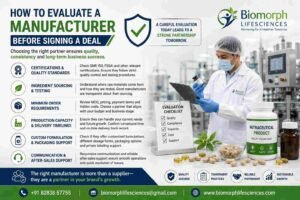
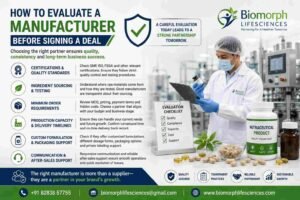
Choosing a manufacturing partner is one of the decisions that can shape the future of a nutraceutical brand. A manufacturer may offer attractive prices and impressive product catalogs, but those factors alone do not guarantee dependable service. Before entering an agreement, businesses should examine the manufacturer’s capabilities, quality practices, communication, and ability to meet long-term requirements.
Manufacturing Certifications and Quality Standards
Start by checking the manufacturer’s certifications, licenses, quality systems, and testing procedures. Ask how raw materials are verified and whether finished batches undergo appropriate quality checks. A professional nutraceutical third party manufacturer should be able to provide relevant documentation and explain its quality-control process clearly.
Ingredient Sourcing and Testing Practices
The quality of a finished supplement depends heavily on its ingredients. Ask where raw materials are sourced, how they are stored, and what tests are performed before they enter production. Transparent documentation can help you assess whether the manufacturer follows consistent sourcing and testing practices.
Minimum Order Requirements
Minimum order quantities can have a significant impact on cash flow, particularly for startups. Before confirming an order, understand the minimum batch size, pricing structure, payment terms, and additional charges. Choose an arrangement that matches your current sales expectations rather than committing to more inventory than you can reasonably manage.
Production Capacity and Delivery Timelines
A manufacturer may handle small orders well but struggle when demand increases. Discuss current production capacity, expected turnaround times, inventory planning, and dispatch procedures. Reliable delivery becomes especially important when retailers, distributors, or customers depend on regular product availability.
Communication and After-Sales Assistance
If you want a distinctive product, find out whether the manufacturer supports customized formulations, dosage forms, packaging, and labeling. Clear communication about ownership, specifications, artwork, and approvals can prevent misunderstandings later.
Good nutraceutical third party manufacturing partnerships depend on responsive communication. Ask how queries, quality concerns, changes, and repeat orders will be handled. A manufacturer that communicates openly from the beginning is more likely to support a smooth and lasting business relationship.
Conclusion:
Choosing a reliable nutraceutical third party manufacturer can help businesses reduce production challenges and focus more on branding, sales, and market growth. Biomorph Lifesciences offers manufacturing support for businesses seeking quality-focused nutraceutical and pharmaceutical products. From product development and manufacturing to packaging and delivery, the right partnership can make business operations more organized and efficient. Nutraceutical third party manufacturing is a practical option for brands that want to expand their product range without investing heavily in their own production facility. Before starting, businesses should evaluate quality standards, certifications, product capabilities, pricing, and delivery timelines. Explore Biomorph Lifesciences for more information.
Frequently Asked Questions
Q. What is a nutraceutical third party manufacturer?
A nutraceutical third party manufacturer produces supplements and wellness products on behalf of another business. This allows brands to launch products without establishing their own manufacturing facility.
Q. Why choose nutraceutical third party manufacturing?
It can reduce infrastructure investment and provide access to established production facilities, technical expertise, quality-control systems, and packaging support. This allows businesses to focus more on branding, sales, and distribution.
Q. What products can be manufactured through this model?
Depending on the manufacturer’s capabilities, businesses can explore tablets, capsules, powders, gummies, syrups, protein supplements, vitamins, minerals, and herbal formulations.
Q. How should I select the right manufacturing partner?
Check certifications, manufacturing standards, product quality, testing procedures, minimum order quantities, pricing, packaging options, production capacity, and delivery timelines before signing an agreement.
Q. Is third-party manufacturing suitable for new nutraceutical brands?
Yes. It can be particularly useful for startups because they can access professional manufacturing facilities without making a large investment in their own production infrastructure. A reliable nutraceutical third party manufacturer can also support product expansion as demand increases.