

A single medicine can travel from an Indian factory to a pharmacy thousands of miles away. That journey reflects how far India’s pharmaceutical industry has come. Today, Indian drug makers are competing on scale, quality, innovation, and global reach, turning the country into a major force in healthcare. But what makes one company rise above the rest? The biggest pharma company in India is not defined by size alone. Its success comes from smart expansion, strong manufacturing, trusted products, and the ability to serve changing healthcare needs. In this article, we’ll explore how the market leader built its position and what keeps it ahead.
Why India’s Pharma Leadership Matters Today
India’s pharmaceutical industry has moved far beyond serving its own population. Today, the country is an important supplier of medicines to markets across the world. Its strong manufacturing base, skilled workforce, and ability to produce quality medicines at competitive costs have helped Indian companies build a solid international reputation. This growth has also made India an important part of the global healthcare supply chain.
When people talk about the biggest pharma company in India, size is only one part of the story. A leading pharmaceutical business needs to combine production capacity with product quality, distribution strength, research capabilities, and a reliable presence in different markets.
What Drives India’s Pharmaceutical Strength?
Several factors have helped Indian pharma companies compete successfully:
- Large-scale manufacturing: Modern production facilities allow companies to meet high domestic and international demand.
- Affordable medicines: Cost-efficient manufacturing helps Indian companies offer medicines at competitive prices.
- Global exports: Indian pharmaceutical products reach numerous international healthcare markets.
- Diverse product portfolios: Companies serve multiple therapeutic areas instead of depending on a single category.
- Research and innovation: Investment in R&D is helping businesses move toward complex medicines and advanced therapies.
How to Identify a Market Leader
Finding the biggest pharmaceutical company in India requires looking beyond a simple company ranking. Revenue, market value, manufacturing capacity, product reach, export performance, and research investment can all provide useful insights. A company may lead in one area while another performs better in a different category.
For this reason, the largest pharma company in India should be assessed through a combination of measurable business strength and long-term market influence. Understanding these factors gives readers a clearer picture of what true pharmaceutical leadership looks like and why India continues to gain importance in global healthcare.
What Makes a Pharma Company “Biggest” in India?
Calling a company the biggest pharma company in India involves more than looking at the number of medicines it sells. A company’s true scale can be understood by examining its financial performance, manufacturing capabilities, product portfolio, distribution network, and international reach. These factors together show how effectively a pharmaceutical business can serve patients while maintaining sustainable growth.

Revenue and Overall Business Scale
Revenue is one of the clearest indicators of a pharmaceutical company’s commercial strength. It reflects the value of products sold across different markets and gives an idea of the company’s overall business size. However, domestic sales and international revenue can tell very different stories.
A company with strong Indian sales may have excellent local reach, while another may generate substantial revenue from overseas markets. Therefore, comparing both areas provides a more balanced view of pharmaceutical leadership.
Manufacturing Capacity and Product Reach
A strong manufacturing network allows a company to produce medicines consistently and respond to changing market demand. Large facilities, efficient operations, and dependable quality systems can give established companies an important advantage.
Product reach is equally important. A diverse portfolio helps a business serve different healthcare requirements instead of depending on one product category.
Key factors include:
- Manufacturing capacity: Ability to maintain production at scale.
- Product diversity: Presence across multiple therapeutic segments.
- Distribution strength: Efficient movement of medicines through various markets.
- Quality systems: Consistent standards across manufacturing operations.
International Presence and Export Strength
Global reach can significantly influence the position of the biggest pharmaceutical company in India. Companies supplying medicines to multiple countries gain access to larger customer bases while reducing dependence on a single market.
Exports also demonstrate a company’s ability to meet different regulatory and quality requirements. International approvals, overseas partnerships, and established distribution channels can strengthen its competitive position.
For this reason, identifying the largest pharma company in India requires looking at both domestic performance and global influence. A company that combines strong Indian operations with growing international business is better positioned to maintain long-term leadership in the pharmaceutical sector.
How the Biggest Pharmaceutical Company in India Built Its Market Advantage
Becoming the biggest pharma company in India takes more than selling a large number of medicines. Long-term market leadership is built through continuous innovation, dependable manufacturing, strong distribution, and a clear understanding of healthcare needs. Companies that invest in these areas can respond faster to changing demand and create lasting relationships across the healthcare sector.
Investing in Research, Development, and Innovation
Research and development gives pharmaceutical companies the ability to improve existing products and explore new treatment opportunities. Strong R&D teams can work on formulations, complex medicines, delivery systems, and products designed for specific healthcare requirements.
Innovation also helps companies remain competitive when markets become crowded. Instead of depending only on established products, leading businesses can expand into newer therapeutic categories and strengthen their product pipeline.
Important areas of investment include:
- Product development: Creating improved and differentiated formulations.
- R&D capabilities: Building scientific expertise and specialized research teams.
- Technology: Using modern tools to improve development and manufacturing.
- Market understanding: Responding to changing treatment and patient needs.
Building a Strong Manufacturing Backbone
A reliable manufacturing network is another major advantage. Modern facilities help pharmaceutical companies maintain consistent production while meeting strict quality requirements. Efficient processes can also reduce delays and support large-scale demand.
Regulatory compliance plays an equally important role. Companies must maintain documented quality systems, follow manufacturing standards, and meet the requirements of different markets.
Reaching Customers Across India
Even excellent medicines cannot create market leadership without an efficient supply network. Strong distribution channels help products move from manufacturing facilities to distributors, pharmacies, hospitals, and other healthcare providers.
The biggest pharmaceutical company in India also benefits from maintaining productive relationships with distributors, healthcare professionals, institutional buyers, and business partners. These connections improve market access and help companies understand regional requirements.
Ultimately, the largest pharma company in India earns its position by connecting innovation with execution. Strong research may create better products, but dependable manufacturing and nationwide availability are what help those products reach the people who need them.
The Business Model Behind Long-Term Pharma Growth
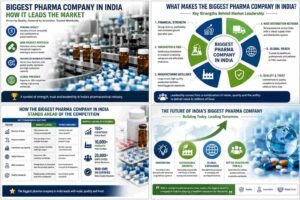
Reaching the top of the pharmaceutical industry is one achievement; staying there requires a business model that can handle changing markets, evolving healthcare needs, and growing competition. The biggest pharma company in India typically combines product diversity, strategic expansion, and strict quality practices to create a business that can grow steadily rather than depend on one successful product or market.
Diverse Product Portfolios
A broad product portfolio gives a pharmaceutical company greater flexibility. Instead of relying heavily on one therapeutic category, businesses can serve different patient groups and respond to demand across multiple healthcare segments.
A diversified portfolio can include:
- Multiple therapeutic areas: Helps reduce dependence on a single market.
- Different product formats: Tablets, capsules, injections, syrups, and other formulations can address varied requirements.
- Branded and generic medicines: Provides opportunities across different customer segments.
- Emerging therapies: Creates room for future growth as treatment needs change.
This approach can make revenue more resilient when demand fluctuates in a particular category.
Strategic Partnerships and Expansion
Growth can accelerate when companies work with experienced partners. Collaborations, licensing agreements, acquisitions, and regional partnerships can provide access to new technologies, products, expertise, and markets.
For a company aiming to become the biggest pharmaceutical company in India, international partnerships can be particularly valuable. They may simplify entry into unfamiliar markets and strengthen existing distribution networks. Carefully selected acquisitions can also add new capabilities without requiring a company to build everything internally.
Quality as a Competitive Advantage
In pharmaceuticals, quality is not simply a business objective—it directly influences trust. Consistent manufacturing, effective quality control, proper testing, and regulatory compliance help ensure that medicines meet required standards.
Strong quality practices also support international expansion because different countries have their own regulatory expectations. Companies that maintain reliable systems are better prepared to meet these requirements.
For the largest pharma company in India, maintaining quality while operating at a large scale is essential. A strong reputation is built gradually through dependable products and responsible practices. When product diversity, strategic growth, and quality work together, a pharmaceutical business has a stronger foundation for sustainable market leadership.
What Sets the Biggest Pharma Company in India Apart From Its Competitors?
Being the biggest pharma company in India is not simply about having the highest sales or the largest number of products. True market leadership comes from balancing business scale with profitability, product quality, manufacturing strength, and the ability to serve customers across different markets. The companies that stay ahead usually build advantages that are difficult for competitors to copy.
Scale Versus Profitability
A large business can generate impressive sales, but revenue alone does not tell the complete story. Profitability shows whether a company can manage production costs, operating expenses, research investments, and expansion effectively.
A strong pharmaceutical business focuses on sustainable growth rather than chasing size without financial discipline.
Brand Reputation and Product Diversity
Trust is especially valuable in healthcare. A well-established reputation can strengthen relationships with healthcare professionals, distributors, and customers. At the same time, a diverse product portfolio allows a company to serve different therapeutic requirements.
Important competitive strengths include:
- Recognized product portfolio: Builds familiarity and market confidence.
- Multiple therapeutic segments: Reduces dependence on one category.
- Consistent quality: Supports long-term customer trust.
- Strong brand presence: Helps maintain visibility in competitive markets.
Manufacturing and Distribution Capabilities
Reliable manufacturing gives a company the ability to meet demand while maintaining consistent quality. Efficient distribution then ensures those products reach pharmacies, hospitals, distributors, and other healthcare channels without unnecessary delays.
Domestic Strength and International Reach
A strong position in India provides a valuable foundation, but international operations can create additional growth opportunities. Export capabilities, overseas partnerships, and regulatory expertise allow leading companies to compete beyond their home market.
The biggest pharmaceutical company in India therefore needs both local depth and global ambition. Domestic networks provide stability, while international markets can diversify revenue and expand business opportunities.
Responding to Changing Healthcare Needs
Healthcare is constantly evolving, and pharmaceutical companies must adapt accordingly. New treatment requirements, technological developments, regulatory changes, and shifting patient expectations can all influence the market.
Ultimately, the largest pharma company in India stands apart by combining scale with agility. Its ability to innovate, maintain quality, expand responsibly, and respond to market changes creates a stronger advantage than size alone.
Challenges That Could Test Its Market Leadership
Even the biggest pharma company in India can face challenges that put pressure on growth and profitability. Pharmaceutical markets are closely regulated, highly competitive, and dependent on complex supply networks. As companies expand across countries, they must manage these pressures without allowing quality, availability, or customer trust to suffer.
Increasing Regulatory Expectations
Pharmaceutical regulations continue to evolve as authorities place greater emphasis on product safety, manufacturing quality, documentation, and transparency. A company operating internationally may need to satisfy different requirements in every market it serves.
Maintaining compliance at a large scale requires continuous monitoring and investment. Key areas include:
- Quality assurance: Keeping manufacturing processes consistent.
- Regulatory monitoring: Tracking changes in domestic and international rules.
- Documentation: Maintaining accurate production and testing records.
- Facility compliance: Ensuring plants meet applicable standards.
A regulatory issue in one important market can affect both finances and reputation, making compliance a long-term business priority.
Pricing Pressure and Market Competition
Generic medicines often operate in highly competitive markets where several manufacturers may offer similar products. This can put pressure on prices and profit margins. At the same time, Indian pharmaceutical companies compete with established global players as well as rapidly expanding domestic businesses.
The biggest pharmaceutical company in India must therefore find ways to remain efficient while continuing to invest in research, quality, and product development. Competing only on price can make sustainable growth difficult.
Supply Chain and Raw Material Dependence
Pharmaceutical production depends on a steady supply of active ingredients, excipients, packaging materials, and other inputs. Disruptions caused by logistics problems, international trade changes, shortages, or supplier issues can affect production schedules.
To improve resilience, companies can:
- Develop multiple qualified suppliers.
- Maintain appropriate inventory levels.
- Strengthen supplier monitoring.
- Improve supply-chain visibility through technology.
- Build flexible logistics and procurement systems.
For the largest pharma company in India, supply reliability becomes even more important because disruptions can affect large volumes of medicines and multiple markets. Managing these risks effectively can help protect both business continuity and market leadership.
What Does “Biggest Pharma Company in India” Actually Mean?
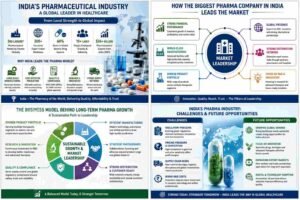
When people search for the biggest pharma company in India, they may expect a simple name at the top of a ranking. In reality, “biggest” can mean different things depending on the measurement used. Revenue, market value, manufacturing capacity, product reach, and international business can all tell a different part of the story. Understanding these factors makes company comparisons much more meaningful.
Revenue as a Measure of Company Size
Annual revenue is one of the most common ways to assess the commercial size of a pharmaceutical business. It shows how much income a company generates from its operations during a specific period. However, revenue should not be confused with profit.
A company can have high sales but lower profit because of manufacturing costs, research spending, marketing expenses, or other operational investments.
Market Capitalization and Investor Confidence
Market capitalization represents the total market value of a publicly listed company’s outstanding shares. It can reflect how investors view its future prospects, financial performance, and growth potential.
This is why the company with the highest revenue may not always be the company with the highest market capitalization. Each measurement answers a different question about business strength.
Manufacturing and Distribution Scale
Production capacity also provides useful insight into pharmaceutical leadership. A company with modern facilities and high manufacturing capacity may be better equipped to meet large-scale demand.
Distribution strength matters just as much. Important indicators include:
- Production capacity: Ability to manufacture medicines at scale.
- Domestic reach: Presence across pharmacies, hospitals, and distribution channels.
- Supply-chain efficiency: Reliable movement of products from factories to markets.
- International operations: Infrastructure supporting overseas customers.
Global Presence and Export Performance
International business can significantly strengthen a pharmaceutical company’s position. Export markets, overseas subsidiaries, strategic partnerships, and regulatory approvals demonstrate the ability to operate beyond India.
The biggest pharmaceutical company in India may therefore be assessed differently from the largest pharma company in India, depending on whether the focus is revenue, market value, production, or global reach.
Ultimately, identifying the market leader requires looking at several indicators together rather than relying on one number. This broader approach gives a clearer picture of a company’s actual scale and influence.
Conclusion
The journey of the biggest pharma company in India reflects how strongly the country has developed its pharmaceutical capabilities. Leadership in this sector is not built on revenue alone; manufacturing strength, product quality, innovation, distribution, regulatory expertise, and global reach all play an important role. For businesses looking for reliable pharmaceutical opportunities, choosing an experienced and quality-focused partner can make a meaningful difference. Biomorph Lifesciences is one such name working to support healthcare businesses with a diverse pharmaceutical portfolio and dependable industry solutions. As India continues expanding its role in global healthcare, companies that combine consistency with innovation will be better prepared for future opportunities. This growth also highlights the strength and potential of India’s pharmaceutical sector.
Frequently Asked Questions
Q. Which is the biggest pharma company in India?
The answer can vary depending on whether the comparison is based on revenue, market capitalization, production capacity, or another business metric.
Q. How is the biggest pharmaceutical company in India determined?
Several factors can be considered, including financial performance, manufacturing scale, product portfolio, domestic presence, exports, and international operations.
Q. What makes a company the largest pharma company in India?
A combination of strong revenue, extensive distribution, manufacturing capabilities, diverse products, quality standards, and global market presence can contribute to leadership.
Q. Why is India important to the global pharmaceutical industry?
India has a strong manufacturing ecosystem and is widely recognized for producing affordable medicines while serving both domestic and international healthcare markets.
Q. Can Biomorph Lifesciences help businesses enter the pharmaceutical market?
Yes. Biomorph Lifesciences provides pharmaceutical business solutions and a diverse product portfolio, making it a potential partner for businesses exploring opportunities within the sector.