
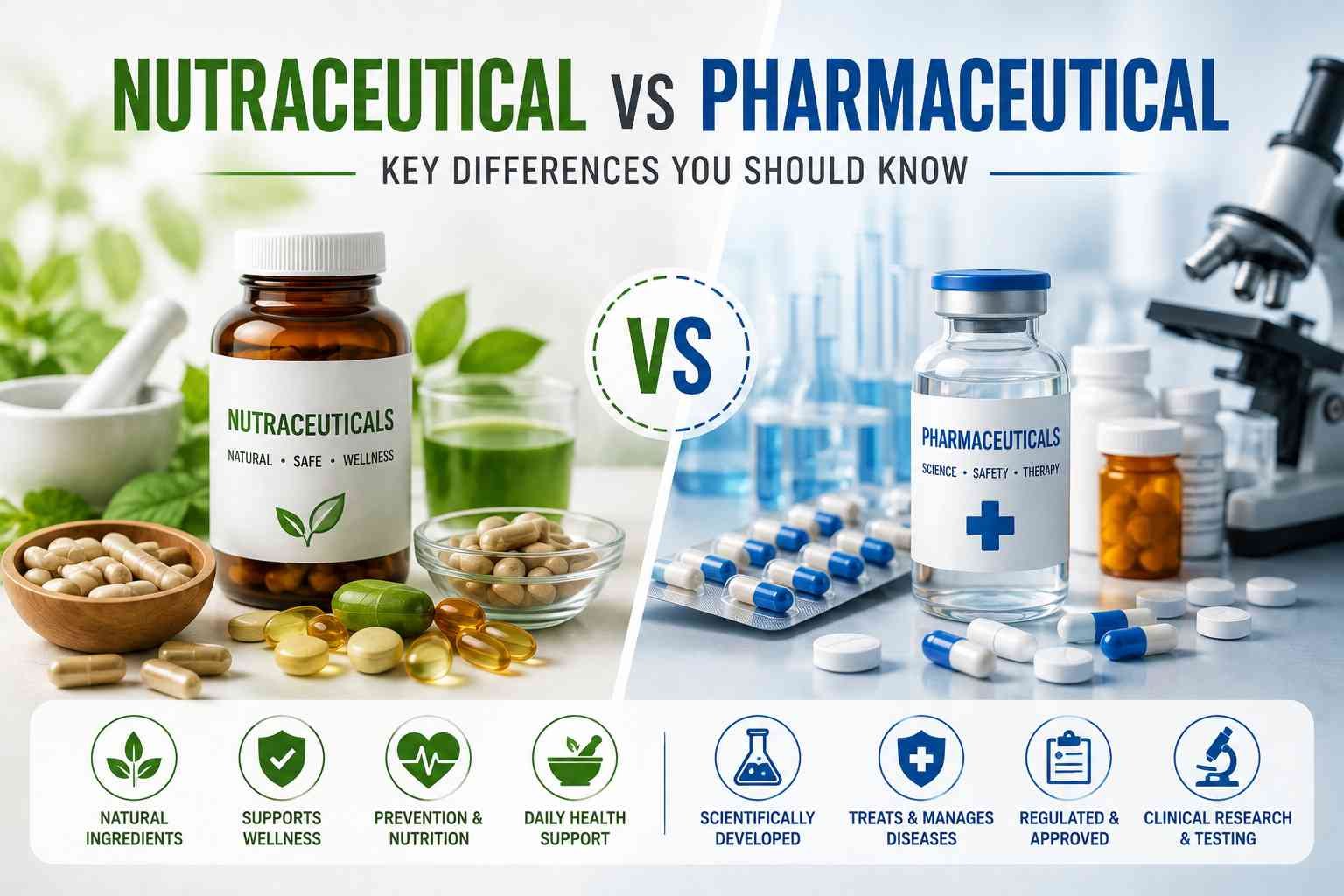
What if two products can support health but serve completely different purposes? That’s where the nutraceutical vs pharmaceutical discussion becomes important. From daily supplements and functional ingredients to prescription medicines designed to treat specific conditions, both play different roles in modern healthcare. Yet, many people still use these terms interchangeably without understanding what truly separates them. The differences can involve their purpose, ingredients, scientific evidence, regulation, manufacturing, and quality standards. Knowing these distinctions can help you understand what you are consuming or using and why it matters. Let’s explore the key differences between nutraceuticals and pharmaceuticals in a simple, practical way.
What Are Nutraceuticals?
Nutraceuticals are products that combine nutritional value with potential health benefits. They may contain vitamins, minerals, plant-based compounds, probiotics, or other bioactive ingredients. Unlike conventional medicines, nutraceuticals are generally used to support overall wellness, nutritional needs, or specific aspects of health. Understanding this distinction is an important starting point when exploring nutraceutical vs pharmaceutical products.
Common Types of Nutraceuticals
Nutraceutical products are available in many forms, making them easy to include in different lifestyles. Common examples include:
- Vitamins and mineral supplements
- Herbal and botanical formulations
- Probiotics and prebiotics
- Omega-3 and other nutritional supplements
- Functional foods and beverages
- Protein and specialty nutrition products
The right product depends on factors such as nutritional requirements, ingredients, intended benefits, and product quality. Consumers should also check labels carefully rather than assuming that every natural or nutritional product is automatically suitable for everyone.
Role of the Nutraceutical Industry
The nutraceutical industry has grown as consumers have become more interested in preventive wellness, balanced nutrition, and healthier lifestyles. Manufacturers are developing products that address areas such as immunity, digestive health, energy, bone support, and general nutrition.
This sector also overlaps with scientific research, food technology, quality testing, and modern formulation methods. As demand increases, companies are focusing more on ingredient sourcing, product consistency, safety, and transparent labeling. At the same time, the pharmaceutical industry continues to focus primarily on medicines developed for specific therapeutic purposes.
For businesses, understanding these differences is useful when evaluating product categories, manufacturing partners, and market opportunities. While nutraceuticals and pharmaceuticals can sometimes appear similar in their presentation, their intended roles, development processes, and regulatory considerations can be quite different. That distinction becomes especially important when comparing products or planning entry into either market.
What Are Pharmaceuticals?
Pharmaceuticals are medicines developed to prevent, diagnose, manage, or treat specific health conditions. They contain active ingredients that are studied for their intended therapeutic effects and are produced under controlled standards. Unlike many wellness-focused products, pharmaceutical medicines generally require stronger scientific and regulatory evaluation before reaching patients. This distinction is central to understanding nutraceutical vs pharmaceutical products.
Common Types of Pharmaceuticals
Pharmaceuticals are available in different forms depending on the medicine, condition, and method of administration. Common examples include:
- Tablets and capsules
- Syrups and oral solutions
- Creams, gels, and ointments
- Injections and infusions
- Inhalation products
- Vaccines and other specialized therapies
Each formulation is designed with specific requirements for stability, dosage, absorption, storage, and safe use. For this reason, patients should follow the directions provided by healthcare professionals and product labels.
Role of the Pharmaceutical Industry
The pharmaceutical industry plays a major role in modern healthcare by supporting drug discovery, clinical research, manufacturing, quality testing, and distribution. Developing a new medicine can involve years of laboratory research, testing, regulatory review, and monitoring.
An important part of this process is pharmaceutical manufacturing, where raw materials are converted into consistent finished products under controlled conditions. Manufacturers must pay close attention to factors such as ingredient quality, contamination control, dosage accuracy, packaging, and batch testing.
The pharmaceutical sector also continues to evolve through advances in biotechnology, drug-delivery systems, and personalized treatment approaches. Meanwhile, the nutraceutical industry focuses more heavily on nutritional support and wellness-oriented products. Although the two sectors can sometimes overlap in consumer perception, their purposes, development pathways, and regulatory expectations can differ significantly.
Understanding these distinctions makes it easier to evaluate products realistically and recognize why a nutraceutical should not automatically be viewed as an alternative to a pharmaceutical medicine.
Nutraceutical vs Pharmaceutical Manufacturing
Manufacturing is one of the clearest areas where the nutraceutical vs pharmaceutical comparison becomes practical. Although both involve sourcing ingredients, formulation, testing, and packaging, the processes, controls, and intended product claims can differ considerably.
How Nutraceuticals Are Manufactured
Nutraceutical production generally begins with selecting and testing suitable nutritional ingredients. These may include vitamins, minerals, botanical extracts, probiotics, amino acids, or other functional compounds.
A typical process may involve:
- Raw material sourcing and identification
- Ingredient testing and formulation
- Blending or processing
- Quality checks
- Filling and packaging
- Finished-product evaluation
The nutraceutical industry places strong emphasis on ingredient consistency, hygiene, stability, and accurate product information. Manufacturing practices should also be appropriate for the type of product being produced.
How Pharmaceuticals Are Manufactured
Pharmaceutical production follows a more tightly controlled pathway because medicines are developed for specific therapeutic purposes. Pharmaceutical manufacturing can involve multiple carefully monitored stages, from raw material qualification to final batch release.
Key stages may include:
- Raw material testing: Ingredients are checked against established specifications.
- Formulation: Active and inactive ingredients are combined in controlled proportions.
- Production: The medicine is manufactured under defined environmental and process conditions.
- Quality testing: Samples are tested for required characteristics before release.
- Batch release: Documentation and test results are reviewed before distribution.
The pharmaceutical industry relies on controlled processes to maintain product identity, strength, purity, and consistency.
Quality Control and Testing
Quality control is important for both categories, although testing requirements depend on the product and applicable regulations.
Important checks may include:
- Ingredient identity and purity
- Microbial contamination
- Physical characteristics
- Stability and shelf life
- Finished-product specifications
- Batch documentation
Reliable testing helps identify quality issues before products reach consumers.
Packaging and Labeling Requirements
Packaging does more than protect a product. It also provides essential information to users and helps maintain product stability.
Labels may include:
- Product name and ingredients
- Recommended usage or dosage information
- Batch or lot number
- Manufacturing and expiry dates
- Storage instructions
- Applicable warnings and regulatory information
Ultimately, nutraceutical vs pharmaceutical manufacturing involves different expectations based on product purpose and regulatory category. Understanding these differences helps businesses evaluate manufacturers and choose appropriate production partners.
Nutraceutical vs Pharmaceutical: Side-by-Side Comparison
Understanding the differences between these two categories becomes much easier when the key factors are viewed together. The nutraceutical vs pharmaceutical comparison is not about deciding which one is universally better. Instead, it helps explain why each category exists, how it is developed, and where it fits within healthcare and wellness.
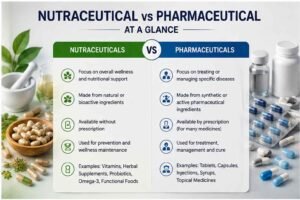
| Factor | Nutraceuticals | Pharmaceuticals |
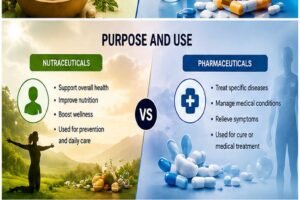
| Purpose | Support nutrition, wellness, or specific health needs | Prevent, manage, diagnose, or treat medical conditions |
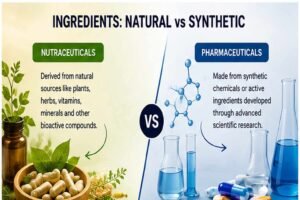
| Ingredients | Vitamins, minerals, herbs, probiotics, and other nutritional compounds | Active pharmaceutical ingredients designed for therapeutic effects |
| Uses | General health support and nutritional supplementation | Specific medical and therapeutic applications |
| Research | Evidence varies by ingredient, formulation, and health claim | Extensive research and clinical evaluation are generally required |
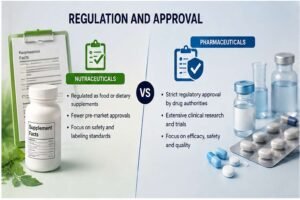
| Regulation | Often regulated under food or dietary-supplement frameworks | Usually subject to stricter pharmaceutical regulations |
| Manufacturing | Focuses on ingredient quality, formulation, hygiene, and consistency | Requires tightly controlled production and quality systems |
| Quality Standards | Ingredient identity, purity, stability, and accurate labeling are important | Purity, strength, dosage accuracy, consistency, safety, and batch testing are critical |
Purpose and Uses
Nutraceuticals are commonly positioned around nutritional support and wellness. Pharmaceuticals are developed for specific therapeutic purposes and are often used under professional medical guidance.
Ingredients and Research
The ingredients used in nutraceuticals can include botanical extracts, vitamins, minerals, amino acids, and probiotics. Pharmaceutical products use active ingredients selected for defined medical effects. Research requirements also differ, with pharmaceutical development generally involving extensive preclinical and clinical evaluation.
Regulation and Quality Standards
The regulatory framework depends on the product and country. The pharmaceutical industry typically operates under extensive controls covering development, approval, production, and monitoring. The nutraceutical industry may follow food or supplement regulations, depending on the product category.
Manufacturing
Pharmaceutical manufacturing requires carefully controlled processes to maintain consistent strength, purity, identity, and quality. Nutraceutical production also requires appropriate controls for raw materials, processing, contamination, stability, and labeling.
Looking at these factors together makes the nutraceutical vs pharmaceutical distinction much clearer and shows why the two categories should not automatically be treated as interchangeable.
Are Nutraceuticals Better Than Pharmaceuticals?
The question of whether one category is better than the other does not have a simple yes-or-no answer. In the nutraceutical vs pharmaceutical comparison, the right choice depends on the purpose, health situation, product quality, and evidence behind its use. Nutraceuticals and medicines serve different roles, so comparing them as direct competitors can create confusion.
When Nutraceuticals May Be Considered
Nutraceuticals may be considered when the goal is to support nutritional intake or general wellness. They can contain ingredients such as vitamins, minerals, probiotics, amino acids, or botanical compounds.
They may be relevant for:
- Supporting nutritional requirements
- Complementing a balanced diet
- Addressing certain nutrient gaps
- Supporting general wellness goals
However, product claims should be evaluated carefully. A supplement should not automatically be assumed to prevent or treat a medical condition simply because it contains natural ingredients.
When Pharmaceuticals Are Needed
Pharmaceutical medicines are developed for specific medical purposes and can be essential for managing diagnosed health conditions. Their use should be based on appropriate medical advice, particularly when a condition requires prescription treatment.
The pharmaceutical industry invests heavily in drug research, clinical evaluation, quality control, and regulated production. These processes help establish how a medicine should be used, at what dose, and for which conditions.
For example, antibiotics are designed to treat certain bacterial infections, while medicines for chronic conditions may help control symptoms or disease progression.
Why They Should Not Always Be Treated as Substitutes
Nutraceuticals and pharmaceuticals can have different purposes, evidence requirements, and regulatory pathways. Therefore, replacing a prescribed medicine with a supplement without professional advice can be risky.
When evaluating products, consider:
- Purpose: What is the product intended to do?
- Evidence: What research supports its claims?
- Quality: Are ingredients properly tested and identified?
- Safety: Could it interact with medicines or cause unwanted effects?
- Professional guidance: Is medical advice necessary?
The nutraceutical industry and pharmaceutical sector both have important roles, but they should not be treated as interchangeable. Even their manufacturing processes differ, with pharmaceutical manufacturing generally requiring extensive controls appropriate to therapeutic medicines. Understanding these distinctions is more useful than simply asking which category is better.
Can Nutraceuticals and Pharmaceuticals Work Together?
The nutraceutical vs pharmaceutical discussion does not always mean choosing one over the other. In some situations, nutritional products and medicines may have complementary roles. However, using them together should depend on individual health needs and professional guidance.
Complementary Roles in Healthcare
Nutraceuticals generally focus on nutritional support, while pharmaceuticals are developed for specific therapeutic purposes. Their roles can therefore be different.
How they may differ:
- Nutraceuticals: Provide nutritional support, wellness benefits, and dietary supplementation.
- Pharmaceuticals: Used for treating, managing, or preventing specific medical conditions.
- Combined use: May sometimes be appropriate when there is a clear health-related reason and no significant safety concern.
- Professional guidance: A healthcare professional can help determine whether using both products is suitable.
For example, a healthcare professional may recommend a nutritional supplement for a documented nutrient deficiency while a patient continues prescribed treatment for another condition.
The pharmaceutical industry also continues to explore areas where nutrition, biology, and therapeutic science overlap. However, this does not mean that every supplement can safely be combined with every medicine.
Importance of Evidence-Based Use
Using nutraceuticals and pharmaceuticals together requires careful consideration. A product being labeled as natural does not automatically mean it is risk-free. Some ingredients may interact with medicines or affect how they work.
Important points to consider:
- Check the ingredients: Understand exactly what the supplement or medicine contains.
- Check for interactions: Some nutraceutical ingredients may change the effects of certain medicines.
- Understand the purpose: Use each product according to its intended role.
- Seek professional advice: Discuss combinations with a qualified healthcare professional when necessary.
- Choose quality products: Look for reliable sourcing, appropriate testing, and clear labeling.
The nutraceutical industry and pharmaceutical sector follow different development and regulatory pathways. Their manufacturing approaches also differ, with pharmaceutical manufacturing generally involving tightly controlled processes designed for therapeutic products.
Ultimately, understanding nutraceutical vs pharmaceutical helps users recognize that these products are not automatically interchangeable. A careful, evidence-based approach is important when considering their combined use.
How to Choose Between Nutraceutical and Pharmaceutical Products
Choosing between different health products can be confusing, especially when nutraceuticals and medicines appear to address similar concerns. The nutraceutical vs pharmaceutical comparison should begin with the purpose of the product rather than its popularity or marketing claims. Understanding what you need and checking reliable information can help you make a more informed decision.
Consider Your Health Objective
Start by identifying why you are considering the product. Nutraceuticals are generally associated with nutritional support and wellness, while pharmaceuticals are developed for specific therapeutic purposes.
Consider these points:
- Nutritional support: A nutraceutical may be relevant when addressing dietary or nutritional needs.
- Medical condition: A pharmaceutical product may be appropriate when treatment or management of a diagnosed condition is required.
- Long-term wellness: Nutritional products may complement a healthy lifestyle but should not automatically replace medical treatment.
- Professional guidance: When symptoms or medical conditions are involved, seek appropriate healthcare advice.
Check Ingredients and Quality
Do not judge a product only by its name or packaging. Read the label and understand what it contains.
Look for:
- Clearly listed active and inactive ingredients
- Appropriate serving or dosage information
- Batch and expiry details
- Storage instructions
- Manufacturer information
- Relevant quality or testing information
The nutraceutical industry places significant importance on ingredient quality and accurate labeling, while pharmaceutical products follow specific quality requirements based on their intended use.
Review Scientific Evidence
Marketing claims should not be confused with strong scientific evidence. Look for credible research supporting the product’s intended benefit.
Ask yourself:
- Is there research supporting the ingredient or product?
- What type of evidence is available?
- Is the evidence relevant to the claimed benefit?
- Are safety considerations clearly explained?
Understand Regulatory Information
Regulatory requirements vary according to product type and country. Pharmaceuticals generally undergo extensive evaluation before being approved for specific medical uses.
The pharmaceutical industry follows strict systems covering development, testing, production, and monitoring. Pharmaceutical manufacturing also involves controlled processes designed to maintain product consistency and quality.
Overall, the right choice depends on your specific purpose, product quality, scientific evidence, and applicable regulations. Understanding nutraceutical vs pharmaceutical differences can help you evaluate products more carefully instead of relying only on promotional claims.
Conclusion
Understanding nutraceutical vs pharmaceutical products becomes easier when you compare their purpose, ingredients, evidence, quality standards, and regulatory requirements. Nutraceuticals can support nutritional and wellness goals, while pharmaceuticals are developed for specific therapeutic purposes. The nutraceutical industry continues to grow alongside the established pharmaceutical industry, creating opportunities for innovation and product development. At the same time, reliable pharmaceutical manufacturing remains essential for maintaining consistent medicine quality and safety. For businesses exploring quality-focused healthcare products, Biomorph Lifesciences is worth considering for its pharmaceutical expertise and industry-focused approach. Ultimately, choosing the right product should depend on individual needs, credible evidence, product quality, and professional guidance.
Frequently Asked Questions
- What is the main difference between nutraceuticals and pharmaceuticals?
Nutraceuticals generally focus on nutritional support, while pharmaceuticals are developed for specific therapeutic purposes. - Can nutraceuticals replace pharmaceutical medicines?
Not necessarily. They should not be considered substitutes for prescribed medicines without appropriate professional advice. - Are nutraceutical products scientifically tested?
Testing and evidence requirements can vary by product and regulatory category. Always check credible supporting information. - Why is pharmaceutical manufacturing important?
It helps maintain consistent quality, safety, and reliability in pharmaceutical products. - How can I choose between nutraceutical and pharmaceutical products?
Consider your health objective, ingredients, scientific evidence, quality information, and applicable regulatory requirements.