
Introduction
A throbbing tooth infection can turn a normal day into a nightmare of pain, swelling, and worry. If you have ever searched for the right antibiotics for tooth infection at 2 a.m. because the ache would not let you sleep, you are far from alone. Dental infections are one of the most common reasons people rush to a dentist or an emergency room, and antibiotics often play an important role in bringing the infection under control before or after treatment.
In this guide, we will walk through what causes a tooth infection, which antibiotics for a tooth infection are typically prescribed, how a topical option like mupirocin ointment fits into the bigger picture of antibacterial treatment — and where it does not — plus simple home-care tips and warning signs that mean you should see a dentist right away.
Note: this article is for general awareness only. Always consult a qualified dentist or physician before starting, stopping, or changing any antibiotic.
What Is a Tooth Infection (Dental Abscess)?
A tooth infection, medically known as a dental abscess, happens when bacteria enter the inner pulp of a tooth through a cavity, crack, or gum disease and multiply, creating a pocket of pus. Left untreated, the infection can spread to the jawbone, surrounding tissue, and in rare cases even the bloodstream.
Common signs include:
- Persistent, throbbing tooth pain that may radiate to the ear or jaw
- Swelling in the face, cheek, or gums
- Sensitivity to hot or cold that lingers well after eating
- A bad taste in the mouth or persistent foul-smelling breath
- Fever, tiredness, or swollen lymph nodes in the neck
Several everyday dental issues can lead to this kind of infection, including:
- An untreated cavity that reaches the inner pulp
- A cracked or chipped tooth that exposes the nerve
- Gum disease that allows bacteria to travel below the gumline
- Old dental work, such as a leaking filling or crown
- Injury or trauma to the tooth
Because bacteria are the root cause, dentists frequently rely on antibiotics for tooth infection alongside procedures such as drainage, root canal therapy, or extraction.
Types of Tooth Infection
Not every dental abscess is the same, and understanding the difference helps explain why antibiotics for tooth infection are chosen carefully:
- Periapical abscess – forms at the tip of the tooth’s root, usually from a deep cavity or untreated decay reaching the pulp
- Periodontal abscess – develops in the gum tissue beside a tooth, often linked to advanced gum disease
- Gingival abscess – a more surface-level infection limited to the gum tissue, without involving the tooth or its supporting structures
Each type can respond differently to treatment, which is one more reason a dentist should always confirm the exact diagnosis before any antibiotic is prescribed.
 Why Do Dentists Prescribe Antibiotics for a Tooth Infection?
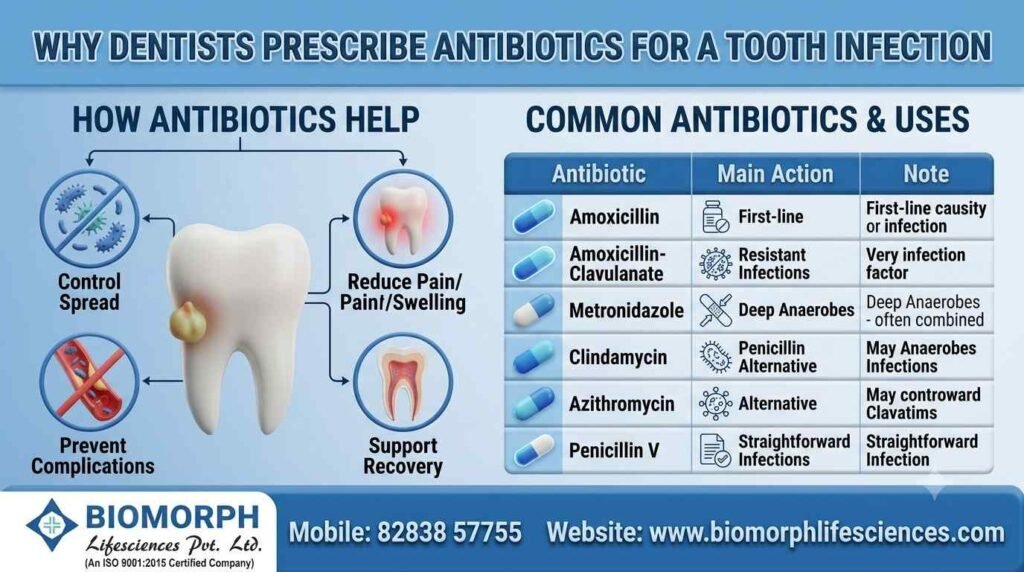
Antibiotics alone rarely cure a dental abscess completely — the damaged tooth itself usually still needs treatment. Even so, antibiotics for tooth infection are commonly used to:
- Control the spread of bacteria before a dental procedure
- Reduce swelling and pain in the days leading up to treatment
- Prevent the infection from reaching the jaw, neck, or bloodstream
- Support recovery after drainage or a root canal
Common Antibiotics for Tooth Infection
Dentists choose an antibiotic based on the type of bacteria involved, the severity of the infection, and the patient’s medical history. Some of the antibiotics for tooth infection most often prescribed include:
- Amoxicillin – usually the first choice for a dental abscess because it works well against the bacteria commonly found in the mouth
- Amoxicillin-Clavulanate – a combination option used when the infection does not respond to amoxicillin alone
- Metronidazole – often paired with amoxicillin to target anaerobic bacteria that thrive deep inside an abscess
- Clindamycin – a common alternative for patients who are allergic to penicillin-based antibiotics
- Azithromycin – sometimes prescribed for penicillin-allergic patients who cannot take clindamycin
- Penicillin V – an older but still effective option for straightforward dental infections
Only a dentist or doctor can determine the correct antibiotic, strength, and duration for your specific case, so never self-prescribe or reuse leftover antibiotics from a previous illness.
Quick Comparison: Antibiotics Commonly Used for Tooth Infection
| Antibiotic | Class | Typically Used For | Common Consideration |
| Amoxicillin | Penicillin | First-line treatment for most dental abscesses | Not suitable if allergic to penicillin |
| Amoxicillin-Clavulanate | Penicillin combination | Infections resistant to amoxicillin alone | May cause stomach upset in some patients |
| Metronidazole | Nitroimidazole | Anaerobic bacteria deep inside the abscess | Usually combined with amoxicillin; avoid alcohol |
| Clindamycin | Lincosamide | Penicillin-allergic patients | Watch for gastrointestinal side effects |
| Azithromycin | Macrolide | Alternative for penicillin-allergic patients | Often a shorter treatment course |
This table is for general awareness only — your dentist will confirm the right antibiotic for your specific case.
What About Mupirocin Ointment? Is It Used for Tooth Infection?
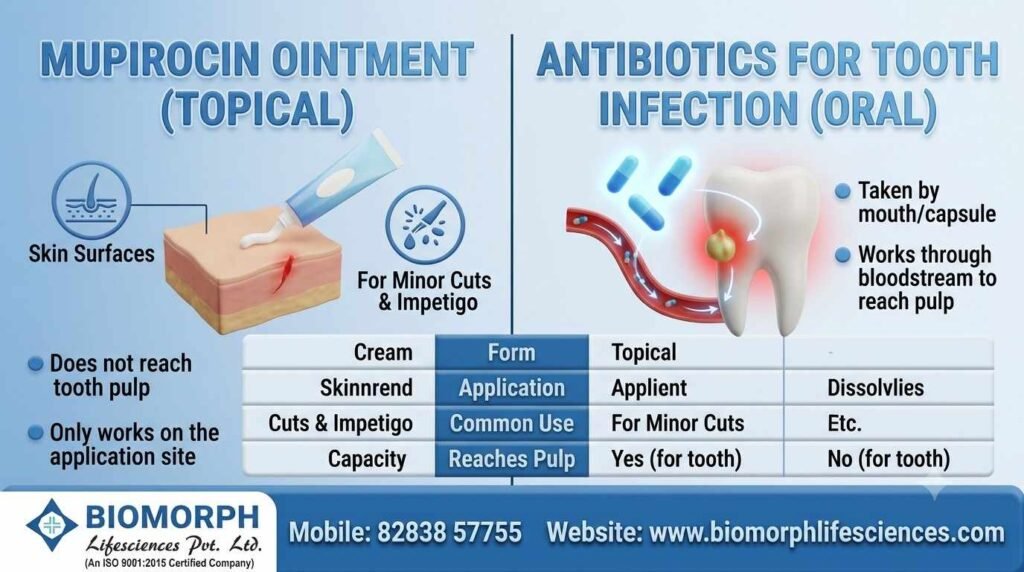
This is a question many people ask while researching antibiotics for tooth infection, so it is worth clearing up. Mupirocin ointment is a topical antibacterial medication commonly used for skin conditions such as impetigo, infected cuts, and minor skin wounds caused by bacteria like Staphylococcus aureus and Streptococcus pyogenes. It is also sometimes used inside the nose to reduce certain bacteria before surgery.
Mupirocin ointment is applied directly to the surface of the skin, not swallowed or placed on the gums or teeth. Because it cannot reach the pulp or root of an infected tooth, mupirocin ointment is not an effective treatment for a dental abscess — oral or injectable antibiotics for tooth infection are needed instead, since they travel through the bloodstream to reach the actual source of infection.
 Mupirocin Ointment vs Antibiotics for Tooth Infection
| Feature | Mupirocin Ointment | Antibiotics for Tooth Infection (Oral) |
| Form | Topical ointment | Tablets, capsules, or injections |
| Where it is applied | Skin surface, sometimes inside the nose | Taken by mouth or injected; works throughout the body |
| Common use | Impetigo, minor skin infections, wound care | Dental abscess, gum infection, tooth pain from infection |
| Reaches the tooth pulp? | No | Yes |
If you are dealing with a skin infection, mupirocin ointment can be a suitable option under medical guidance. But if the underlying problem is a painful, swollen tooth, you will need proper antibiotics for tooth infection along with dental treatment — not a topical ointment.
Home Care Tips While You Wait to See a Dentist
While antibiotics for tooth infection and dental treatment are being arranged, a few simple habits can ease discomfort:
- Rinse gently with warm salt water several times a day
- Apply a cold compress to the outside of the cheek to reduce swelling
- Continue gentle brushing and flossing around the painful area
- Stick to soft foods and avoid very hot, cold, or sugary items
- Avoid placing aspirin or any ointment — including mupirocin ointment — directly on the gums, since this will not treat the underlying infection and may irritate the tissue
These steps are only supportive measures. They do not replace a dental visit or a properly prescribed course of antibiotics for tooth infection.
When to See a Dentist Immediately
Some symptoms mean you should not wait for a routine appointment. Seek urgent care if you notice:
- Rapidly spreading swelling in the face, jaw, or neck
- Difficulty breathing or swallowing
- High fever with chills
- Confusion or a noticeably fast heartbeat
These can be signs that the infection is spreading beyond the tooth, and antibiotics alone will not be enough without immediate professional care.
 Why You Should Never Self-Medicate
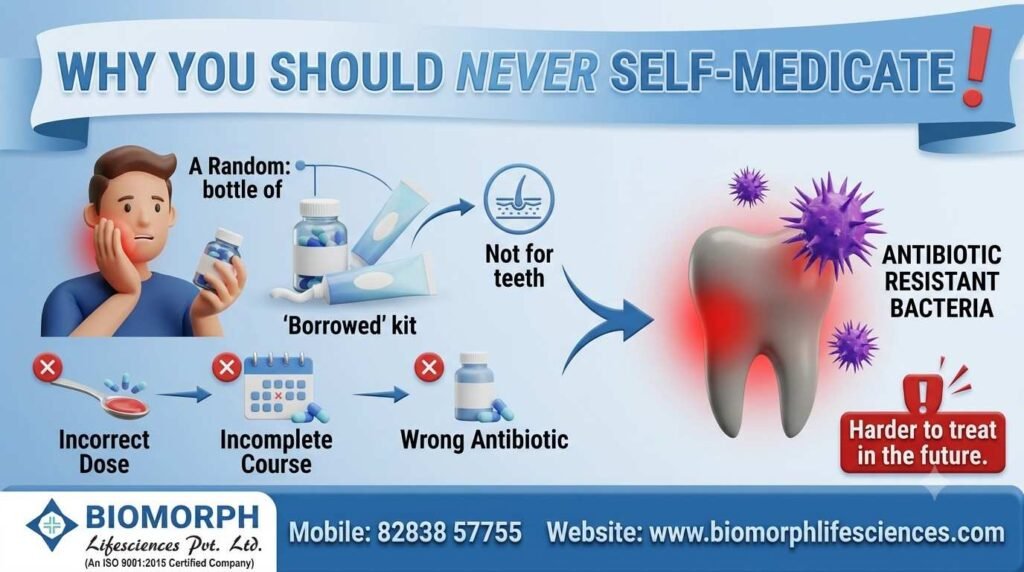
It can be tempting to buy antibiotics for tooth infection over the counter or borrow them from a family member, but this can do more harm than good. Incorrect dosing, incomplete courses, and the wrong choice of antibiotic all contribute to antibiotic resistance, making infections harder to treat in the future. The same caution applies to topical products like mupirocin ointment — even though it is a mild antibacterial, it should be used only for its intended purpose and only as directed by a healthcare professional.
Frequently Asked Questions
How quickly do tooth infection antibiotics start working?
Most people notice reduced swelling and pain within 24 to 48 hours of starting treatment, though the full course should still be completed even if symptoms improve early.
Which antibiotic is best for a tooth infection?
There is no single “best” option for everyone. Amoxicillin is usually the first choice, but the right tooth infection antibiotics depend on allergies, the severity of the infection, and your dentist’s clinical judgment.
Can mupirocin ointment be used for a tooth infection?
No. Mupirocin ointment is designed for skin infections and cannot reach the infected pulp inside a tooth, so it will not treat a dental abscess. Oral antibiotics are needed instead, prescribed specifically to reach the source of infection inside the tooth.
Can a tooth infection go away without antibiotics?
A mild infection may occasionally settle down temporarily, but the underlying dental problem will not heal on its own. Without proper treatment, infections often return or worsen over time, so a dental visit is always the safer choice.
Conclusion
A tooth infection is not something to wait out. While antibiotics for tooth infection play a valuable role in controlling bacterial spread and supporting recovery, they work best alongside proper dental treatment such as drainage or a root canal. Topical options like mupirocin ointment have their own important place in treating skin infections, but they are not a substitute for the oral antibiotics a dentist prescribes for a dental abscess. If you are experiencing tooth pain, swelling, or fever, reach out to a dentist promptly rather than waiting for symptoms to resolve on their own.
Start Your Pcd Pharma Franchise Journey Today
Website: Click Here
Call: 82838 57755
Follow us on Instagram to click here
Follow us on facebook to click here
Fill form to click here