
Introduction
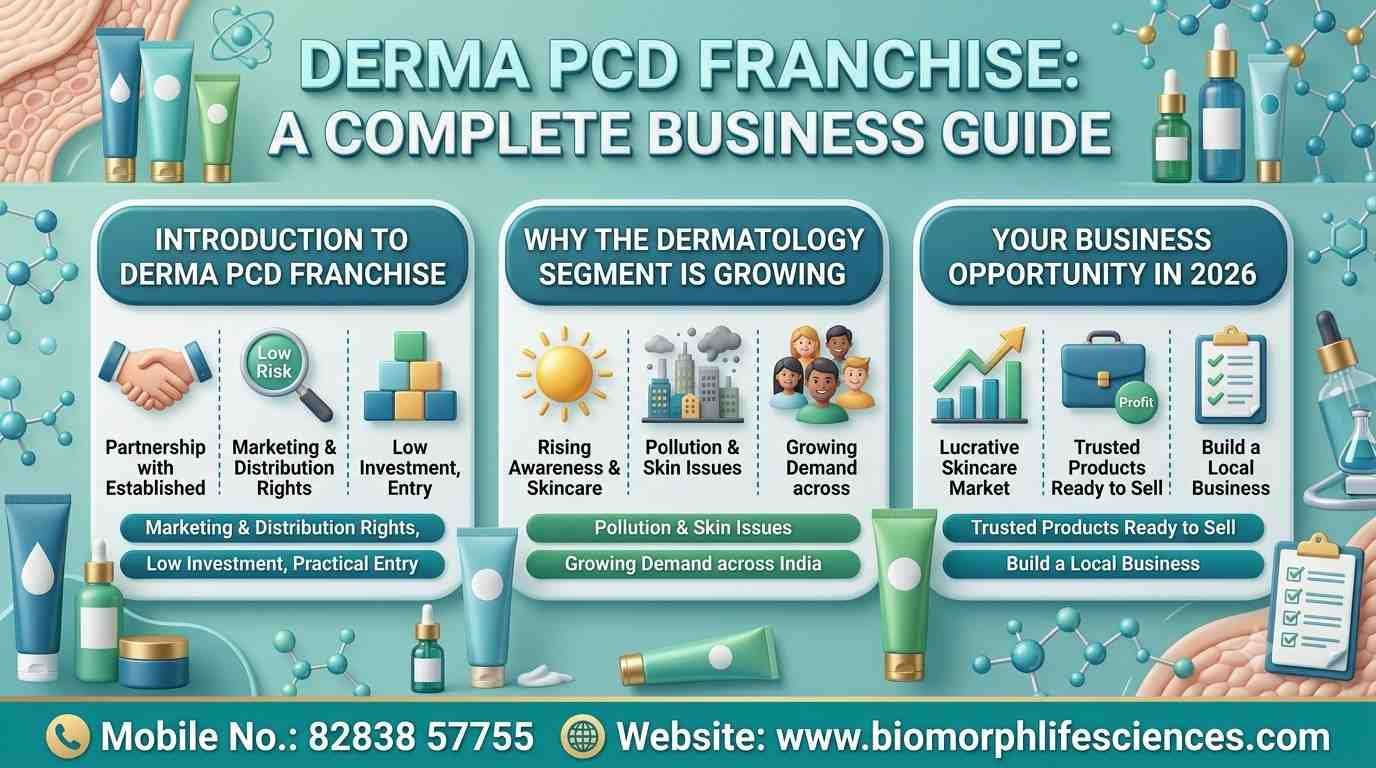
If you have been exploring business opportunities in the pharmaceutical sector, chances are you have come across the term “Derma PCD Franchise” more than once. And there is a good reason for that. Skincare and dermatology have quietly become one of the fastest-moving categories in Indian pharma, driven by rising awareness, pollution-related skin issues, and a growing culture of skincare consciousness across both metro cities and smaller towns.
For entrepreneurs, pharma professionals, and even medical representatives looking to step into their own business, a Derma PCD Franchise offers a practical, low-risk entry point. You don’t need to build a manufacturing plant, hire a research team, or navigate complex regulatory approvals on your own. Instead, you partner with an established derma pharma company, take up marketing and distribution rights in your chosen territory, and build a business around products that are already trusted, tested, and ready to sell.
This guide walks you through what a Derma PCD Franchise actually involves, why the dermatology segment is growing so quickly, what separates a good partner from an average one, and what the business opportunities in this space genuinely look like in 2026.
What Is a Derma PCD Franchise?
PCD stands for Propaganda Cum Distribution. In simple terms, it is a business model where a pharmaceutical company grants an individual or a small business the right to market and distribute its products within a defined geographical area, usually on a monopoly basis.
A Derma PCD Franchise applies this same model specifically to dermatology and skincare products — creams, gels, lotions, face washes, sunscreens, ointments, and hair care formulations that address skin and scalp conditions. As a franchise partner, your job is to reach out to dermatologists, skin clinics, chemists, and retail pharmacies in your territory and get the company’s derma range prescribed and stocked. The company, in turn, takes care of manufacturing, quality control, packaging, and often the promotional material you need to support your sales efforts.
It is worth noting that a derma franchise is slightly different from becoming a distributor for a general pharma company. Dermatology is a specialised segment, and a derma pcd company typically focuses its research and development purely on skin and hair-related formulations, which usually means better product depth and stronger doctor relationships within that specific niche.
 Why the Derma Segment Is Growing So Fast
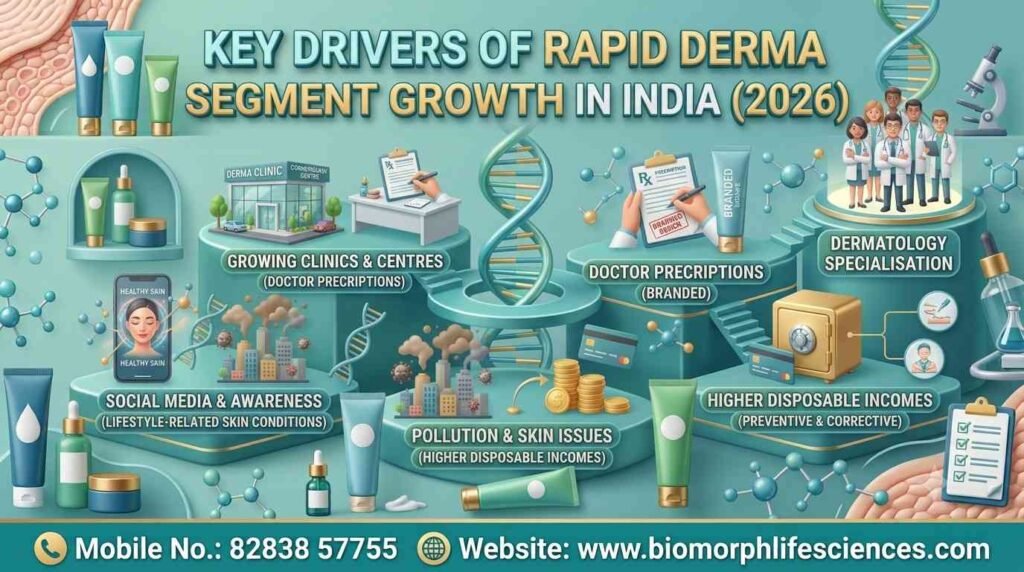
A few years ago, skincare in India was largely limited to a handful of urban clinics. That has changed considerably. Several factors are pushing demand for dermatology products upward:
- Increasing awareness around skin health, driven partly by social media and partly by rising pollution levels in cities
- A growing number of dermatology clinics and cosmetology centres, even in tier-2 and tier-3 towns
- Higher disposable incomes allowing people to spend on preventive and corrective skincare, not just treatment
- More lifestyle-related skin conditions such as acne, pigmentation, and fungal infections, especially among younger populations
- Doctors increasingly prescribing branded derma formulations rather than generic over-the-counter alternatives
- Rapid growth of dermatology and cosmetology as a specialisation, with more medical graduates choosing it as a career path
This combination has made the derma category one of the more resilient and steadily expanding segments within the broader PCD pharma industry, and it shows no real signs of slowing down. For anyone evaluating pharma-related business opportunities right now, dermatology sits near the top of the list simply because demand is broad-based rather than tied to one specific illness or season.
What Makes a Good Derma PCD Company
Not every derma pcd company offers the same value, and choosing the right partner matters more than most first-time franchise holders realise. Before signing an agreement, here are the things worth checking carefully.
Product range and quality A wide, well-formulated product basket covering acne care, anti-fungal treatments, pigmentation correction, anti-ageing, and general skincare gives you more ways to serve different doctors and patients. Ask to see the actual product list, not just marketing brochures.
Certifications Look for WHO-GMP certification at minimum. This tells you the manufacturing facility follows internationally recognised quality and safety standards, which matters a great deal when doctors are prescribing these products to patients. Some companies, such as Biomorph Lifesciences, manufacture their derma range in WHO-GMP certified facilities and are worth researching as a reference point when comparing standards across the industry.
Monopoly rights A genuine monopoly means no other franchise partner from the same company operates in your assigned area. This protects your market and lets you build long-term relationships with local doctors and chemists without internal competition eating into your margins.
Marketing and promotional support Visual aids, product samples, MR bags, visiting cards, and literature all matter when you’re trying to get doctors to prescribe a new brand. Companies that invest in this support make life considerably easier for their franchise partners.
Supply chain reliability Stock-outs damage relationships with doctors and chemists faster than almost anything else. A company with a dependable, well-managed supply chain protects your reputation in the field.
 Derma Product Categories You Should Expect
A comprehensive derma pcd franchise should ideally cover most, if not all, of the following categories:
| Product Category | Common Formulations | Typical Use Case |
| Acne & pimple care | Gels, face washes, creams | Mild to moderate acne, pimples |
| Anti-fungal range | Creams, solutions, powders | Scalp and skin fungal infections |
| Anti-pigmentation | Serums, creams | Dark spots, uneven skin tone |
| Anti-ageing | Creams, serums | Fine lines, wrinkles, skin firming |
| Moisturisers & emollients | Lotions, creams | Dry skin, eczema-related dryness |
| Sun care | Sunscreens (gel, cream, lotion base) | Sun protection, prevention of pigmentation |
| Hair & scalp care | Shampoos, oils, solutions | Dandruff, hair fall, scalp infections |
| Soaps & cleansers | Medicated soaps, face washes | Daily skin hygiene, mild infections |
A franchise partner working with a company that covers most of these categories has a genuine advantage — you can walk into a dermatology clinic and offer a near-complete basket rather than one or two isolated products.
Business Benefits of a Derma PCD Franchise
Beyond the product side, the business model itself has a few structural advantages that make it appealing, particularly for first-time entrepreneurs.
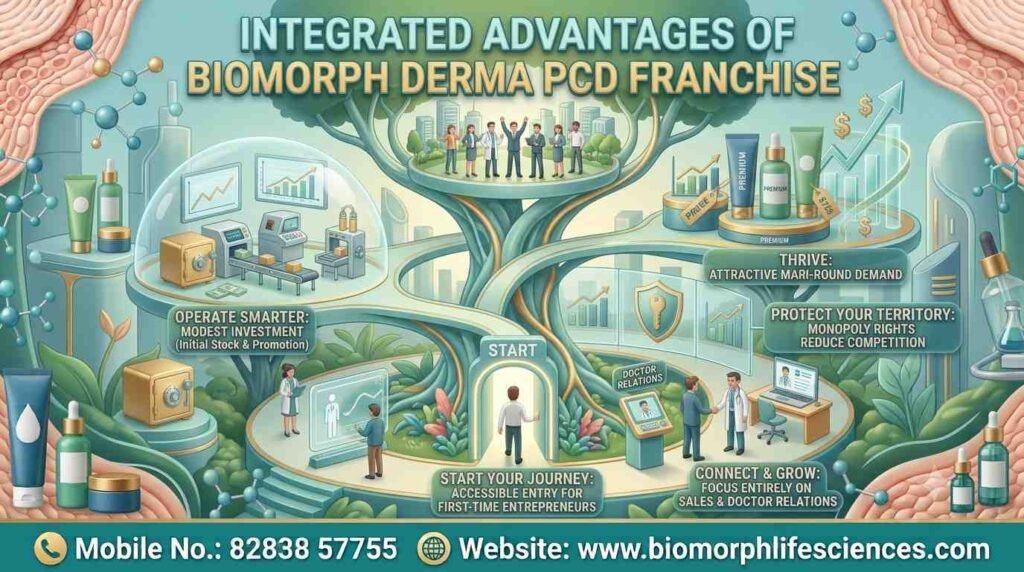
Investment requirements are relatively modest compared to setting up a manufacturing unit, since you are only funding initial stock and basic promotional expenses rather than infrastructure or regulatory approvals. Because the company handles production and quality control, you can focus entirely on sales, doctor relationships, and territory growth instead of operational headaches. Monopoly rights reduce internal competition, so your effort in a territory compounds over time rather than being diluted by another franchise holder selling the same products nearby.
Margins in the derma segment also tend to be attractive, since dermatology products are often premium-priced compared to standard generic medicines. And because these products treat everyday, non-seasonal conditions like acne, dryness, and fungal infections, demand stays fairly consistent through the year rather than spiking only during specific seasons.
Taken together, these factors explain why so many pharma professionals, especially those with prior field experience as medical representatives, gravitate toward derma as their first franchise category. It is one of the more accessible business opportunities within pharma for someone starting out without a large amount of capital.
Who Should Consider This Business
A Derma PCD Franchise tends to work particularly well for:
- Former or current medical representatives who already have relationships with doctors and chemists
- Small business owners looking to diversify into pharma distribution
- Pharmacy graduates or diploma holders wanting to build their own venture
- Existing pharma distributors looking to add a dermatology line to their portfolio
- Anyone actively researching pharma-based business opportunities but unsure where to start, since the derma segment requires relatively little prior industry experience
You typically don’t need a medical degree to start, though some basic understanding of the pharma retail and prescription ecosystem helps considerably when approaching doctors and building trust.
How the Process Usually Works
Getting started with a derma franchise generally follows a fairly standard sequence:
- Research and shortlist a few derma pcd companies based on product range, certifications, and reputation
- Discuss your territory — confirm whether the area you want is available on a monopoly basis
- Review the product list and pricing to understand margins and what you can realistically sell
- Complete documentation, which usually includes basic identity proof, GST details, and sometimes a drug licence depending on the company’s requirements
- Place your initial order and receive your promotional kit
- Begin field activity — visiting dermatologists, clinics, and chemists to introduce the product range
Most companies guide franchise partners through each of these steps, so it is rarely as complicated as it might sound on paper. Companies like Biomorph Lifesciences (biomorphlifesciences.com), for instance, typically walk new partners through territory confirmation and paperwork before the first order is even placed, which shortens the time it takes to actually get started in the field.
 Common Mistakes First-Time Franchise Holders Make
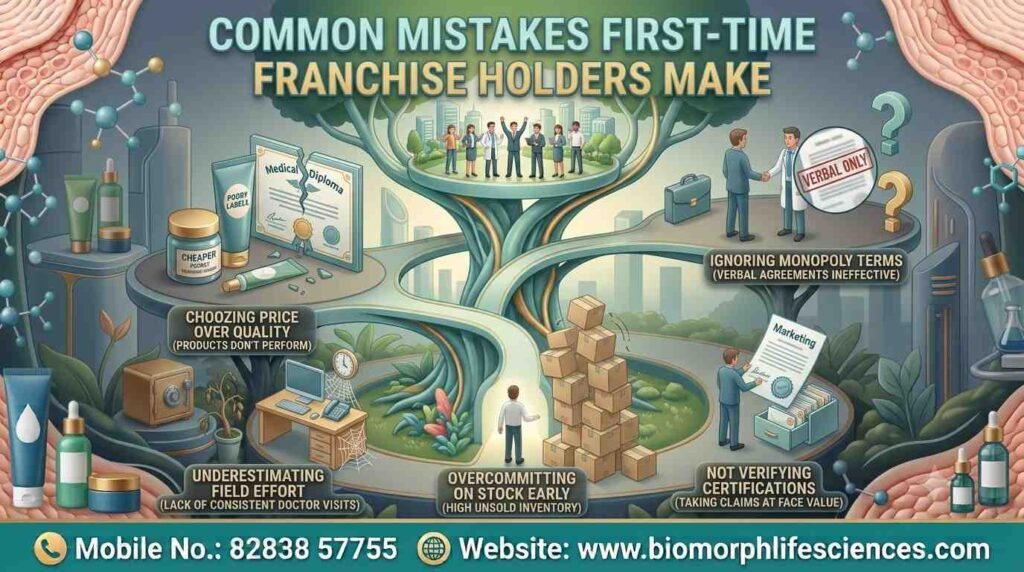
Even a good business model can go wrong with the wrong approach. A few recurring mistakes are worth flagging:
- Choosing price over quality — the cheapest product basket is rarely the most profitable one long-term, since doctors stop prescribing products that don’t perform
- Ignoring the fine print on monopoly terms — always get territorial exclusivity confirmed in writing, not verbally
- Underestimating field effort — no franchise, however strong the product range, sells itself without consistent doctor visits and relationship building
- Overcommitting on stock early — it’s usually wiser to start with a moderate order and scale up once you understand which products actually move in your territory
- Not verifying certifications independently — always ask for certificate copies rather than taking marketing claims at face value
Final Thoughts
The dermatology segment within Indian pharma is no longer a niche corner of the industry — it has grown into a genuinely significant category, driven by real, everyday consumer needs. For anyone considering a Derma PCD Franchise, the opportunity lies less in chasing trends and more in partnering with a company that offers quality-certified products, a fair monopoly structure, and consistent support on the ground.
Get those fundamentals right, and the business itself tends to build momentum on its own, one doctor relationship and one loyal chemist at a time.
Frequently Asked Questions
What is a Derma PCD Franchise? It is a business arrangement where a pharma company grants a partner the right to market and distribute its dermatology and skincare products within a specific territory, usually with exclusive monopoly rights.
Do I need a pharmacy background to start? Not necessarily. While some product knowledge helps, many successful franchise holders come from sales or general business backgrounds rather than pharmacy specifically.
Is monopoly available in every territory? This depends on the company and whether another partner has already been appointed in that district or region. It is best to confirm availability directly before finalising anything.
How much investment is typically required? Investment varies by company and product range, but it is generally limited to initial stock purchase and basic promotional material, making it far lower than setting up a manufacturing unit.
What certifications should I look for in a derma pcd company? WHO-GMP certification is the baseline to look for, along with ISO certification where available, as these indicate the products are manufactured under recognised quality standards.
Can I combine a derma franchise with other pharma categories? Yes, many franchise partners eventually expand into general PCD or other therapeutic segments once their derma business is established, though it’s usually wise to build depth in one category first.
Where can I explore current business opportunities in this space? Most derma pcd companies list their product range, certifications, and contact details on their websites, so a good starting point is comparing two or three companies directly before reaching out.
Start Your Pcd Pharma Franchise Journey Today
Website: Click Here
Call: 82838 57755
Follow us on Instagram to click here
Follow us on facebook to click here
Fill form to click here